|
To view this email as a web page, click here. |
|
|
|
Welcome
We now provide a Mascot Distiller skill for AI coding assistants, including the ability to create your own quantitation reports and export formats.
This month's highlighted publication identifies SOX3 as the leading candidate gene for a rare form of X-linked Charcot–Marie–Tooth neuropathy.
The old NCBI taxonomy browser is being replaced by NCBI Taxonomy. The new site makes it easier than ever to download FASTA files for Mascot searching.
|
|
|
|
|
|
 |
|
Mascot: The trusted reference standard for protein identification by mass spectrometry for 25 years
|
Get a quote
|
|
|
|
|
|
Mascot Distiller skill for coding assistants
|
|
|
AI coding assistants can make custom software development quicker.
In addition to the recent Mascot Parser coding skill for LLMs, we now provide one for Mascot Distiller.
This allows you to instruct the coding agent to create your own quantitation reports and export formats.
Mascot Distiller is a vendor independent application for identifying and quantifying proteins using Mascot database searching.
It ships with a range of reports that cover a lot of common use cases, but it's not possible to include a report for every use case.
Distiller includes an extendable frame work to create custom reports with the Python programming language.
A tutorial in our blog gives a step by step walkthrough to create a report.
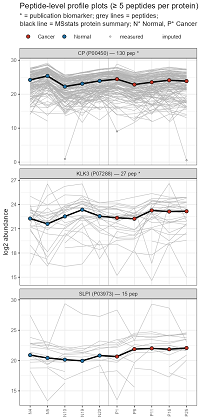
In this example, we use an LLM coding agent to develop a new MSstats report using the Mascot Distiller skill.
MSstats is a well developed statistical framework for group comparisons, time courses, paired samples and more complex designs for proteomics experiments.
After a few iterations and some testing, a new Python script is ready for producing CSV files to use with MSstats.
We have made it available on our GitHub repository, so you don't need to spend extra tokens to recreate it.
A link to the transcript of the coding agent session is included in the same repository.
|
|
|
|
|
|
|
|
|
Featured publication using Mascot
Here we highlight a recent interesting and important publication that employs Mascot for protein identification, quantitation, or characterization. If you would like one of your papers highlighted here, please send us a PDF or a URL.
|
|
|
The Charcot–Marie–Tooth Neuropathy (CMTX3) Complex Structural Variation Causes Differential SOX3 Spatiotemporal Expression
Alexandra Boyling, Anthony N. Cutrupi, Desmond Li, Ben Crossett, Jonathan J. Danon, Edward D. Harvey-Latham, Garth A. Nicholson, Steve Vucic, Marina L. Kennerson
Human Mutation, 2026; 2026:4225263, doi:10.1155/humu/4225263
Charcot–Marie–Tooth (CMT) neuropathy is a clinically heterogenous group of diseases, causing progressive distal muscle weakness and atrophy, sensory impairment, and variable involvement of the central nervous system.
CMTX3 is a rare form of X-linked CMT, whose locus the authors mapped in a previous study.
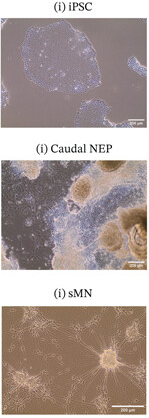
In this study, they use patient-derived induced pluripotent stem cell (iPSC) lines to model CMTX3 at different stages of neuronal differentiation.
Bulk RNA sequencing of patient-derived spinal motor neurons (sMNs) was followed by targeted assessment of local gene regulation using NanoString nCounter.
This suggested SOX3 as the lead spatiotemporally dysregulated gene in CMTX3 sMN differentiation.
Downregulation of SOX3 in CMTX3 neuroepithelial cells (NEPs) was confirmed by proteomics using LC-MS/MS.
iSPCs from three patients and three controls were harvested, digested and tagged with TMT6plex, then analysed using Thermo Orbitrap Eclipse in DDA mode.
The spectra were processed in Proteome Discoverer and searched with Mascot Server 3.1, including rescoring with predicted fragment intensities (MS2PIP model HCD2019).
Differential protein expression was performed in RStudio.
After removal of duplicate features and filtering out protein hits that were not identified in all samples, the authors were able to quantify 8000 proteins per sample.
Of these, 23 proteins were significantly altered between CMTX3 and control NEPs, and SOX3 was the only differentially abundant protein encoded within the CMTX3 linkage region.
|
|
|
|
|
|
|
|
|
NCBI Taxonomy
|
|
|
In October 2026, NCBI is replacing the old taxonomy browser (www.ncbi.nlm.nih.gov/Taxonomy/Browser/wwwtax.cgi) with NCBI Taxonomy.
This is a redesigned site including a new Taxonomy Browser, Common Tree and Taxonomy name check tool.
NCBI Taxonomy links to NCBI Datasets, part of the NIH Comparative Genomics Resource (CGR) Toolkit.
It is now very easy to find and download a FASTA file of protein sequences.
The NCBI database is very comprehensive and includes species and strains not always available in UniProt.
For example, search for Helicobacter pylori.
In addition to the reference genome, NCBI hosts over 9000 other genomes for different strains and isolates.
Follow the link to a genome assembly, click Download, choose file source All, and file type Protein (FASTA).
The FASTA file can be searched with Mascot Server.
The setup instructions are in the online help as well as on YouTube.
|

|
|
|
|
|
|
|
|
About Matrix Science
Matrix Science is a provider of bioinformatics tools to proteomics researchers and scientists, enabling the rapid, confident identification and quantitation of proteins. Mascot continues to be cited by over 2000 publications every year. Our software products fully support data from mass spectrometry instruments made by Agilent, Bruker, SCIEX, Shimadzu, Thermo Scientific, and Waters.
Get a quote
|

|
|
You can also contact us or one of our marketing partners for more information on how you can power your proteomics with Mascot.
|




|
|
|
|
|